
Security
Security Technology Integration Trends for 2026
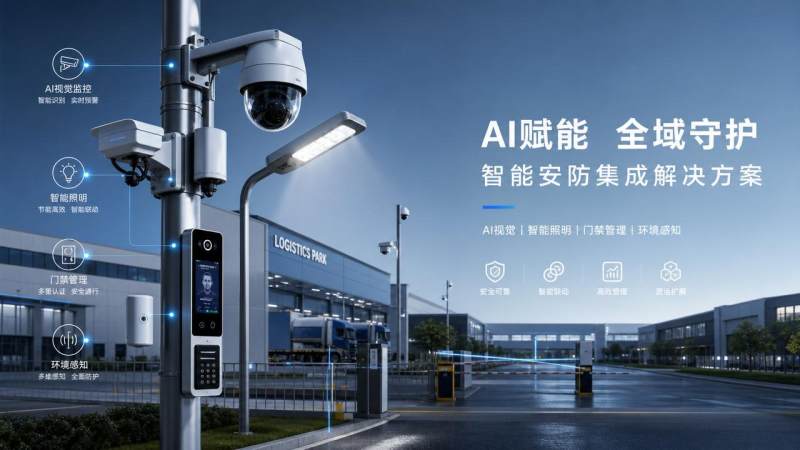
Security technology integration is moving from a technical upgrade to a board-level decision in 2026. As infrastructure becomes more connected and public safety expectations rise, isolated cameras, lighting systems, and monitoring tools no longer deliver enough visibility, resilience, or compliance assurance.
What matters now is how these systems work together across sites, data flows, and operating rules. That shift is why security technology integration has become central to capital planning, risk governance, and long-term operational design.
Across transport hubs, smart construction sites, campuses, logistics networks, and urban assets, leaders are looking for intelligence that connects regulation, AI vision, optical performance, and procurement timing. GSIM sits in that intersection, translating market signals into practical direction.
Why integration defines the 2026 security agenda
The security stack has expanded quickly. Video analytics, edge devices, access control, emergency communications, sensors, and adaptive illumination often come from different vendors and follow different standards.
That fragmentation creates hidden cost. Teams face duplicated infrastructure, uneven data quality, slower incident response, and more complex compliance reviews. In practice, weak integration can reduce the value of otherwise advanced hardware.
In 2026, the stronger question is not which device is best in isolation. It is whether the entire environment can sense, interpret, communicate, and document events in a reliable way.
This is where security technology integration becomes strategic. It aligns physical protection with digital infrastructure, making security operations more measurable and easier to scale across regions.
What security technology integration really means
At a practical level, security technology integration means connecting protective systems so they share context rather than just data. A camera feed alone records events. An integrated environment helps explain them, prioritize them, and trigger the right response.
The concept covers several layers. Hardware compatibility matters, but so do policy alignment, network architecture, lighting quality, data governance, and lifecycle management.
For many projects, illumination is no longer a background utility. Optical conditions directly influence AI vision accuracy, recognition consistency, and nighttime performance. That is why visible light design increasingly sits beside surveillance planning.
GSIM’s perspective is useful here because it connects physical security assurance with optical environment optimization. Instead of treating lighting and surveillance as separate purchases, it frames them as linked decision domains.
The trends shaping security technology integration in 2026
AI vision is becoming environment-dependent
AI vision tools are improving, but their performance still depends on scene quality. Glare, shadow transitions, poor color rendering, and unstable brightness can distort detection results.
This makes integrated optical planning more important than algorithm claims alone. A better lit environment often improves the reliability of analytics without increasing software complexity.
Compliance is moving upstream
Electronic surveillance laws are evolving across regions. Data retention, biometric use, cross-border transfer, and public-space monitoring are receiving closer scrutiny.
As a result, security technology integration now starts earlier in planning cycles. Design teams need to know whether a system can support lawful deployment before procurement locks in the architecture.
VLC is shifting from niche to strategic watchlist
Visible Light Communication is gaining relevance in controlled environments that need secure, localized data exchange. It is not a universal replacement for wireless networking, but it offers interesting value in sensitive or interference-prone settings.
Its importance for security technology integration lies in convergence. When lighting infrastructure also carries communication value, planning decisions affect both operational efficiency and future digital services.
Procurement is becoming more intelligence-led
Budget pressure has not reduced demand for better security outcomes. It has changed how organizations evaluate timing, interoperability, and supplier maturity.
Commercial insights now matter as much as technical specifications. Procurement teams are asking which standards are gaining traction, which categories are consolidating, and where hidden integration costs typically emerge.
Where integrated security creates the most business value
The value of security technology integration changes by environment, but several patterns appear consistently. Better integration improves clarity in high-risk, high-traffic, or highly regulated spaces.
In each case, the benefit is not simply more devices. The benefit comes from making data, lighting conditions, operational workflows, and reporting structures function as one decision environment.
How to assess an integration strategy without getting lost in features
Feature lists can be misleading. A stronger evaluation starts with operating conditions, regulatory exposure, and the quality of response required when something goes wrong.
Several questions help separate mature strategies from attractive demos.
- Can the system maintain reliable performance across changing light conditions, weather, and occupancy patterns?
- Does the architecture support regional compliance requirements without major redesign?
- Will sensor, video, access, and illumination data produce usable context instead of isolated alerts?
- Are procurement assumptions based on lifecycle cost, not just initial equipment pricing?
- Can the solution scale across multiple sites without creating a new management burden?
This is also where external intelligence has real value. GSIM’s Strategic Intelligence Center helps clarify evolving laws, emerging technical convergence, and market behavior that can reshape project assumptions within a short time.
Why GSIM matters in a fragmented market
The market for security technology integration is crowded with products, but decisions rarely fail because of product scarcity. They fail because signal is weak, context is missing, or cross-functional priorities are not aligned.
GSIM addresses that problem as an intelligence portal rather than a simple product showcase. Its role as a standard-setter and decision-support source becomes more relevant when investment cycles are compressed and risk tolerance is lower.
Latest Sector News helps interpret policy changes before they become operational blockers. Evolutionary Trends reporting tracks the fusion of AI vision and VLC. Commercial Insights adds procurement context for smart construction and public safety investment planning.
That combination supports a more disciplined view of security technology integration. It helps organizations compare not only products, but also timing, legal fit, environmental performance, and future adaptability.
A practical path forward for 2026 planning
The most effective next step is usually not a full platform replacement. It is a structured review of where security, lighting, compliance, and communications already overlap but remain poorly coordinated.
Start by mapping critical environments, not just installed assets. Then identify where optical conditions affect analytics, where reporting obligations create friction, and where procurement choices may limit future integration.
From there, establish a short list of decision criteria. Interoperability, legal resilience, optical performance, and commercial timing should sit in the same conversation.
Security technology integration in 2026 is less about chasing a single breakthrough and more about building a coherent operating model. The organizations that move well will be the ones that connect risk, infrastructure, and intelligence early enough to act with confidence.
For teams refining that view, GSIM offers a useful lens: watch the standards, understand the optical layer, test procurement assumptions, and evaluate every upgrade by how well it strengthens the whole security environment.
- physical security assurance
- optical environment optimization
- digital infrastructure
- strategic intelligence center
- electronic surveillance
- AI vision
- Visible Light Communication
- smart construction sites
- public safety projects
- security technology
- sector news
- evolutionary trends
- commercial insights
- security technology integration
The VitalSync Intelligence Brief
Receive daily deep-dives into MedTech innovations and regulatory shifts.