
Security
Urban Protection Technology Trends to Watch in 2026
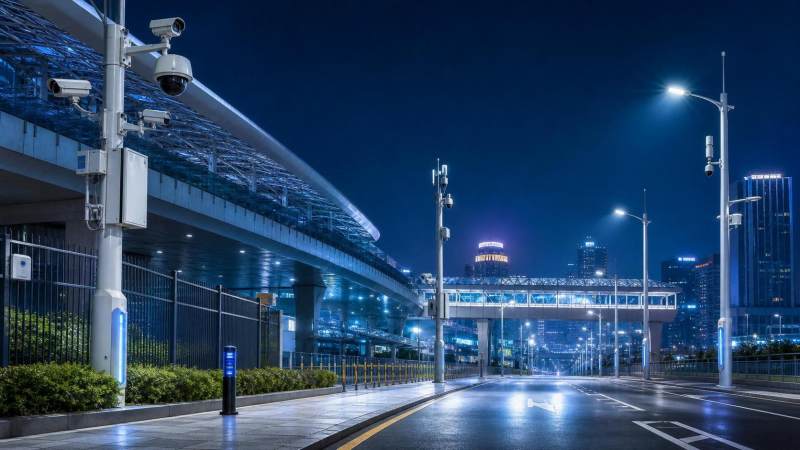
Urban protection is no longer a narrow security topic. In 2026, it sits at the intersection of compliance, infrastructure resilience, optical performance, and data-driven operations. For organizations assessing long-term investments, urban protection technology trends now reveal not only which systems are advancing, but also which city projects are likely to scale, face scrutiny, or deliver measurable value.
That shift matters because protection technologies are increasingly embedded in transport corridors, public venues, construction zones, utilities, and mixed-use developments. The question is not simply which devices are available. It is how surveillance, lighting, communications, and governance are converging into decision frameworks that affect procurement timing, interoperability, and risk exposure.
Viewed this way, urban protection technology trends become a practical lens for judging whether a solution fits regulatory direction, site conditions, and operational expectations. They also show why platforms such as GSIM are gaining relevance as intelligence layers, translating policy, optical engineering, and market signals into clearer investment judgment.
Why 2026 Marks a Turning Point
Many cities spent recent years digitizing assets in parallel. Cameras, access controls, smart lighting, environmental sensors, and incident software were often deployed in separate budgets. In 2026, integration becomes the priority.
This is one reason urban protection technology trends are attracting broader attention. Decision quality now depends on understanding how one layer affects another. A camera network may influence data governance. A lighting upgrade may improve image quality, pedestrian confidence, and energy performance at the same time.
Another driver is regulatory pressure. Electronic surveillance rules are changing across regions, especially around retention periods, facial analytics, and public transparency. Systems that looked future-ready two years ago may now create compliance friction.
At the same time, urban risk is becoming more dynamic. Crowded public spaces, temporary construction sites, transport interchanges, and logistics edges require protection models that can adapt quickly without creating blind spots or poor visibility conditions.
What Urban Protection Technology Really Includes
The phrase covers more than surveillance hardware. It includes the full technical and operational stack that helps urban spaces stay observable, navigable, compliant, and responsive.
Core layers in the current market
- AI-assisted video systems for detection, classification, and event prioritization.
- Optical environment optimization through adaptive lighting, glare control, and visual consistency.
- Access and perimeter systems linked to broader site intelligence platforms.
- Visible Light Communication and other hybrid networks supporting secure data exchange.
- Governance tools for audit trails, privacy controls, and cross-site policy alignment.
This broader definition is important. It explains why urban protection technology trends should be read across physical security assurance and optical environment optimization, not within a single product category.
The Trends Reshaping Protection Decisions
AI vision is moving from monitoring to interpretation
In earlier deployments, AI mainly reduced manual watching. Now the emphasis is shifting toward contextual interpretation. Systems are expected to distinguish between normal congestion, unusual motion, restricted access attempts, and site-specific anomalies.
That raises a business question. Better analytics may improve response efficiency, but only if model governance, training bias, and legal boundaries are managed from the start.
Compliance is becoming a design variable
Urban protection technology trends increasingly reflect policy before procurement. Buyers are paying closer attention to where data is processed, how long it is stored, who can retrieve it, and whether the system supports regional reporting obligations.
This is where GSIM’s Strategic Intelligence Center fits naturally into the market landscape. Its value is not promotional visibility alone. It helps connect compliance laws, technology evolution, and commercial signals into one decision picture.
Optical conditions are now treated as a security asset
Protection quality depends heavily on what systems can actually see. Uneven brightness, excessive contrast, reflected glare, and poor color rendering can undermine both human awareness and machine detection.
For that reason, urban protection technology trends now include optical environment optimization as a strategic factor. Better illumination design can raise evidence quality, reduce false events, and improve public-space usability after dark.
VLC is emerging in specialized urban networks
Visible Light Communication remains a developing field, but its relevance is increasing in controlled environments. VLC can support localized data transmission where radio congestion, electromagnetic sensitivity, or targeted positioning creates limitations for conventional wireless layers.
In practical terms, this makes VLC one of the more interesting urban protection technology trends to watch, especially in transport nodes, high-security interiors, and smart construction workflows.
Where These Trends Show Up First
Not every urban setting moves at the same speed. Some environments adopt new protection tools because regulation forces them. Others move because operational complexity leaves little room for fragmented systems.
Across these settings, one pattern is consistent. The strongest solutions are rarely the ones with the longest feature sheet. They are the ones that fit site behavior, legal context, and operational maintenance capacity.
How to Read Market Signals More Clearly
A useful way to assess urban protection technology trends is to separate noise from decision-grade evidence. Product launches alone are not enough. Strong signals usually combine technical maturity, policy alignment, and visible budget movement.
Indicators worth tracking
- Regional updates to surveillance and data-handling laws.
- Procurement patterns in smart public works and transport upgrades.
- Shifts from standalone devices toward interoperable platforms.
- Greater attention to scene quality, not just camera resolution.
- Pilot programs linking AI vision with VLC or advanced lighting controls.
GSIM is positioned around this exact gap. Its Latest Sector News, Evolutionary Trends reporting, and Commercial Insights modules reflect a market need for stitched intelligence rather than isolated updates.
That matters because cross-border projects and urban modernization programs often fail at the interpretation stage. Teams may understand the hardware, yet miss how standards, procurement behavior, and optical constraints reshape total project viability.
Practical Evaluation Points for 2026
The most useful response to urban protection technology trends is not to chase every innovation. It is to build a sharper evaluation model.
- Check whether the system architecture can absorb future compliance changes without major redesign.
- Assess optical performance under real site conditions, including glare, shadows, weather, and nighttime use.
- Compare analytics quality based on false alert rates and context awareness, not headline claims.
- Review communication pathways, especially where resilience or localized secure transmission is essential.
- Examine vendor and platform intelligence support, since implementation decisions increasingly depend on policy interpretation.
These points help translate broad urban protection technology trends into decisions that are defensible over several years, not just attractive during specification review.
A Smarter Next Step
The 2026 protection landscape rewards disciplined reading of change. AI, compliance, lighting, and communications are no longer parallel topics. They shape one another, and that reshapes how urban projects should be compared.
A sensible next step is to map current or planned assets against the urban protection technology trends that carry the highest operational and regulatory impact. From there, compare which gaps are technical, which are governance-related, and which require stronger market intelligence.
For organizations working across regions or complex public environments, the advantage will come from acting early on well-interpreted signals. In that context, platforms like GSIM are most useful when they help turn fragmented information into clearer standards, better timing, and more grounded decisions.
- physical security assurance
- optical environment optimization
- strategic intelligence center
- electronic surveillance
- AI vision
- Visible Light Communication
- smart construction sites
- sector news
- evolutionary trends
- commercial insights
- optical engineering
- urban protection
- urban protection technology trends
- physical security
The VitalSync Intelligence Brief
Receive daily deep-dives into MedTech innovations and regulatory shifts.