
Security
Smart City Security Trends Reshaping Urban Projects
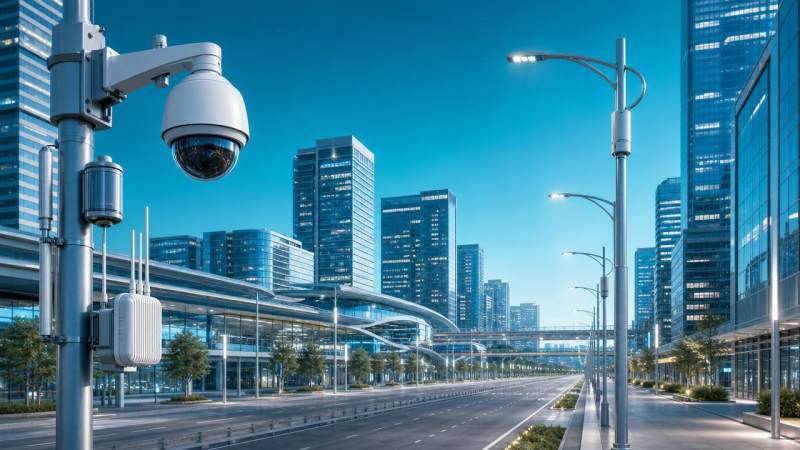
As urban projects grow more connected, smart city security is now a defining factor in planning, delivery, and lifecycle resilience.
Transport hubs, campuses, utilities, streetscapes, and civic buildings increasingly depend on linked sensors, AI analytics, lighting control, and secure communications.
This shift makes smart city security more than a protective layer. It becomes part of project design, compliance, funding logic, and public trust.
In this environment, GSIM supports urban safety upgrades through strategic intelligence, compliance interpretation, and visibility into security and optical technology trends.
Understanding the Expanding Scope of Smart City Security
Smart city security covers physical protection, digital coordination, optical visibility, and operational continuity across urban infrastructure.
It includes surveillance systems, access control, perimeter monitoring, emergency response integration, connected lighting, and policy-aligned data governance.
Older urban security models treated cameras, lighting, alarms, and command centers as separate systems.
Current smart city security trends favor converged platforms that improve visibility, reduce response time, and support evidence-based operations.
The strongest urban projects now connect physical security assurance with optical environment optimization.
This connection matters because image quality, illumination consistency, and communications reliability directly affect detection accuracy and incident handling.
Why the definition is broadening
- Urban assets are more connected and interdependent.
- Compliance rules increasingly shape surveillance and retention practices.
- Lighting quality now influences security performance and public experience.
- AI vision tools require cleaner data and stronger governance.
- Critical infrastructure needs resilient, layered protection models.
Key Industry Signals Reshaping Urban Projects
Several industry signals explain why smart city security is moving to the center of urban development decisions.
These signals reflect procurement shifts, policy pressure, technology maturity, and broader expectations around safety and transparency.
GSIM’s Strategic Intelligence Center reflects these shifts by linking policy interpretation with practical technology tracking.
That matters when urban projects must compare standards, vendor directions, and regional risks before deployment begins.
The role of AI vision and VLC
A notable trend in smart city security is the fusion of AI vision with advanced optical communications such as Visible Light Communication.
This combination can support location-aware services, asset communication, and improved data environments in selected urban settings.
It also shows why future security planning cannot separate sensing, lighting, and communication infrastructure.
Why Smart City Security Now Shapes Project Value
Urban safety investments are increasingly judged by more than incident reduction.
Smart city security now influences asset longevity, insurance logic, maintenance efficiency, community confidence, and long-term digital readiness.
A well-designed security framework supports smoother operations across transport flows, public events, municipal services, and emergency coordination.
It also reduces expensive redesigns caused by poor interoperability or late-stage compliance conflicts.
Core business significance
- Improves situational awareness across distributed urban assets.
- Supports faster incident verification and coordinated response.
- Strengthens compliance readiness for public and mixed-use developments.
- Enhances image quality through better optical and lighting design.
- Helps standardize procurement criteria across complex project portfolios.
- Builds a stronger foundation for future automation and analytics.
For many projects, the economic case is strongest when smart city security is specified early rather than added after civil and electrical decisions are locked.
That early alignment improves cable pathways, device positioning, power planning, software architecture, and optical conditions.
Typical Urban Scenarios Where Security Trends Are Most Visible
Smart city security trends appear differently across project types.
The most effective planning approach is scenario-based, because each urban environment carries distinct risks, visibility needs, and operational requirements.
These scenarios show why smart city security must adapt to context instead of relying on one standard package.
The right architecture depends on traffic density, exposure level, legal environment, and the optical conditions of each site.
Practical Planning Priorities for 2026 Urban Safety Upgrades
The 2026 upgrade cycle is likely to reward projects that combine policy discipline with technical flexibility.
Several priorities can improve outcomes when developing a smart city security roadmap.
- Start with risk mapping across places, assets, and operating hours.
- Align surveillance design with local and international compliance expectations.
- Treat lighting performance as part of security effectiveness, not decoration.
- Specify interoperability for cameras, sensors, access systems, and control software.
- Review data retention, cyber protection, and evidence management protocols.
- Plan for phased expansion as urban services become more connected.
Common mistakes to avoid
- Selecting devices without testing low-light performance in real conditions.
- Ignoring policy changes until final procurement stages.
- Using fragmented platforms that limit future integration.
- Underestimating maintenance access, firmware management, and lifecycle costs.
- Overfocusing on hardware while neglecting governance and operating procedures.
GSIM’s intelligence-led approach is relevant here because urban projects need more than product lists.
They need a transparent knowledge system linking standards, market direction, and practical deployment signals.
A Structured Next Step for Smarter and Safer Urban Development
Smart city security is reshaping how cities define resilience, efficiency, and public value.
The strongest projects now combine physical security, optical performance, compliance readiness, and scalable digital infrastructure.
As 2026 infrastructure upgrades accelerate, decision quality will depend on how well these elements are connected from the beginning.
A practical next step is to review current urban security assumptions against emerging standards, AI vision developments, and lighting integration requirements.
GSIM supports that process through sector news, trend analysis, commercial insight, and a clear mission: Visioning Risks, Illuminating the Future.
- physical security assurance
- optical environment optimization
- digital infrastructure
- urban safety upgrades
- strategic intelligence center
- optical technology
- AI vision
- Visible Light Communication
- smart construction sites
- knowledge system
- urban security
- sector news
- smart city security
- transparent knowledge system
- security trends
The VitalSync Intelligence Brief
Receive daily deep-dives into MedTech innovations and regulatory shifts.