
Security
2026 Critical Infrastructure Optics Risk Map
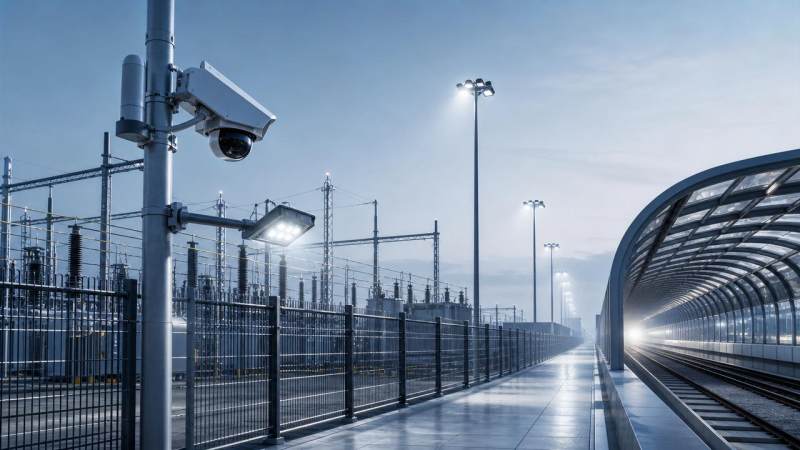
As governments and operators accelerate upgrades to energy, transport, and urban systems, critical infrastructure optics has become a decisive factor in resilience, visibility, and compliance. This 2026 risk map helps enterprise decision-makers identify emerging optical vulnerabilities, regulatory pressure points, and technology shifts shaping physical security and illumination strategy across high-value infrastructure environments.
Why critical infrastructure optics is now a board-level risk issue
For many operators, optics used to be treated as a supporting layer. In 2026, that view is no longer safe. Cameras, perimeter lighting, machine vision, VLC-ready luminaires, sensors, and optical transmission paths increasingly influence operational continuity, incident response, and legal defensibility.
When optical performance degrades, the impact is not limited to image quality. It can affect intrusion detection accuracy, worker safety, emergency navigation, maintenance efficiency, and the ability to meet surveillance retention or evidence requirements. In critical environments, that turns optical design into a strategic resilience topic.
- Energy assets need stable visibility across harsh weather, vibration, dust, and long perimeter distances.
- Transport hubs require glare control, facial and object recognition consistency, and continuous operation during peak traffic periods.
- Urban safety systems depend on balanced illumination for public surveillance, pedestrian movement, and incident traceability.
- Smart construction and utility projects must align procurement decisions with fast-moving compliance expectations.
This is where GSIM provides decision support. Its Strategic Intelligence Center connects security policy developments with optical technology shifts, helping enterprise leaders evaluate not only devices, but also procurement timing, regulatory exposure, and deployment readiness.
What decision-makers often underestimate
The most common mistake is assuming that optical risk sits only with engineering teams. In reality, risk ownership spreads across operations, legal, procurement, security, facilities, and executive management. A camera that fails in low light, or a lighting retrofit that disrupts AI analytics, can trigger financial and compliance consequences far beyond maintenance budgets.
2026 risk map: where critical infrastructure optics is under pressure
The following matrix summarizes the main risk zones affecting critical infrastructure optics across mixed infrastructure portfolios. It is useful for initial screening before detailed site audits or tender planning.
For enterprise decision-makers, the value of a risk map is speed. It highlights where critical infrastructure optics can create hidden liabilities before a project moves into contract execution or public deployment.
High-risk environments to review first
- Substations, generation sites, and fuel facilities with broad perimeters and variable lighting conditions.
- Rail, metro, tunnel, and logistics nodes where visibility and passenger safety converge.
- Municipal corridors, public squares, and mixed-use zones with privacy-sensitive surveillance.
- Smart construction sites where temporary power, dust, and mobile assets alter optical consistency daily.
Which technical factors matter most in critical infrastructure optics procurement?
Procurement teams often receive fragmented specifications from different vendors. To make a sound investment, they need a unified evaluation lens that links optical performance to business outcomes, not just component claims.
Core evaluation dimensions
- Scene visibility: measured lighting adequacy, uniformity, backlight behavior, and dark-zone control.
- Optical compatibility: how well cameras, lenses, illuminators, and analytics perform together under real operating conditions.
- Environmental tolerance: resistance to heat, vibration, moisture, salt exposure, dust, and electromagnetic interference where relevant.
- Maintenance burden: cleaning cycles, alignment sensitivity, replacement access, and calibration complexity.
- Compliance adaptability: ability to support lawful surveillance design, retention policy needs, and future retrofit requirements.
The table below can be used as a practical procurement scorecard for critical infrastructure optics projects involving surveillance, illumination, or integrated security modernization.
This scorecard supports faster alignment between procurement and operations. It also reduces the risk of choosing low-cost components that later undermine visibility, evidence quality, or regulatory acceptance.
Application scenarios: where the optics strategy changes by environment
Energy and utilities
In energy infrastructure, the challenge is perimeter depth and environmental harshness. Critical infrastructure optics must maintain usable detail across long corridors, remote gates, transformer areas, and access roads. Thermal stress, dust, and weather exposure often reduce actual performance below datasheet expectations.
Transport and logistics
Transport assets need balanced optics across crowds, vehicles, signage, and safety pathways. Here, glare is a major problem. Over-illumination can be as damaging as under-illumination because it affects analytics, operator observation, and traveler comfort at the same time.
Urban safety and public space
Municipal projects face a more complex mix of security, social acceptance, and legal review. Critical infrastructure optics in these settings must support public safety goals while staying proportionate, reviewable, and adaptable to changing local requirements for observation scope and retention practices.
Smart construction sites
Temporary sites create moving risk. Lighting towers shift, materials obstruct lines of sight, and access routes change. Procurement leaders should favor modular optical plans that can be recalibrated without redesigning the whole monitoring layout.
How to balance cost, resilience, and upgrade timing
Budget pressure is real, especially when infrastructure owners must modernize several sites at once. The right answer is rarely the cheapest optical package or the most advanced platform. It is the option that protects mission-critical visibility while matching service life, compliance exposure, and upgrade sequencing.
A practical budgeting approach is to divide spending into three layers: immediate risk correction, near-term interoperability, and future-ready enhancements such as AI vision optimization or VLC-related capabilities. This prevents overspending on features a site cannot yet use, while avoiding short-term decisions that block later expansion.
- Correct urgent exposure first, such as blind spots, low-light failure zones, or audit-sensitive installation gaps.
- Standardize interfaces and performance baselines across sites to simplify future procurement.
- Reserve budget for verification, commissioning, and training, not just hardware acquisition.
Compliance and standards: what should enterprises monitor in 2026?
Critical infrastructure optics now sits at the intersection of physical security, illumination quality, data governance, and public accountability. Enterprises do not need to chase every global rule change, but they do need a reliable process for tracking what is relevant by geography and project type.
GSIM’s Strategic Intelligence Center is valuable here because it interprets evolving surveillance-related compliance laws alongside technology trends. That helps decision-makers understand when a lighting or camera specification issue is merely technical and when it may affect tender eligibility, deployment scope, or evidence management policy.
Areas to monitor
- Electronic surveillance rules affecting placement, coverage, and retention expectations.
- Lighting and safety guidance relevant to evacuation routes, work zones, and public access spaces.
- Documentation requirements for procurement transparency and post-installation review.
- Interoperability expectations in smart city, utility, and public project frameworks.
Common misconceptions about critical infrastructure optics
“Higher brightness always means better security”
Not necessarily. Excessive brightness can create washout, reflections, and analytic instability. Good security optics depends on usable contrast and scene control, not brute intensity.
“If the camera spec is strong, the site is covered”
A strong camera cannot compensate for poor beam angles, uneven illumination, dirty housings, or badly positioned fixtures. Critical infrastructure optics works as a system, not a standalone device purchase.
“Compliance can be checked after installation”
Late review is expensive. By the time legal or public-sector compliance questions arise, fixture locations, cable runs, and operating procedures may already be locked in. Early intelligence reduces rework.
FAQ: practical questions enterprise buyers ask
How should we start evaluating critical infrastructure optics across multiple sites?
Start with a tiered review. Rank sites by threat exposure, compliance sensitivity, traffic intensity, and outage consequence. Then compare existing surveillance and illumination conditions against operational needs. This prevents a flat procurement model from being applied to very different risk environments.
What are the biggest procurement mistakes?
Three mistakes recur: buying on component price alone, ignoring optical compatibility with AI analytics, and failing to involve compliance stakeholders early. These errors often lead to retrofit costs, commissioning delays, or underperforming security outcomes.
Which projects benefit most from outside intelligence support?
Cross-border deployments, public safety upgrades, utility modernization, and large smart construction programs benefit the most. These projects face shifting standards, varied supplier offers, and tight delivery schedules, making independent guidance especially useful.
How does VLC affect critical infrastructure optics planning?
Visible Light Communication is not yet universal across all infrastructure projects, but it is influencing luminaire selection, data-capable lighting design, and future service integration. Enterprise planners should watch where AI vision and VLC may converge, especially in controlled industrial or urban digital environments.
Why decision-makers use GSIM for 2026 planning
GSIM is built for organizations that need more than product listings. Its role is to connect global protection demand with precision supply decisions through policy interpretation, trend forecasting, and procurement-oriented intelligence.
Through the Strategic Intelligence Center, decision-makers can track latest sector developments, interpret compliance changes affecting electronic surveillance, and review commercial signals from smart construction and public safety procurement. That creates a clearer path from risk identification to optical strategy.
- Use GSIM to confirm which critical infrastructure optics risks deserve immediate executive attention.
- Use GSIM to compare technology shifts, including AI vision and VLC-related planning implications.
- Use GSIM to support procurement alignment on specifications, compliance checkpoints, and delivery priorities.
Contact us for a practical optics risk review
If your team is planning upgrades in energy, transport, municipal safety, or smart construction, GSIM can help you turn critical infrastructure optics from a vague technical topic into a structured decision framework.
You can consult with us on parameter confirmation, product and solution selection, delivery cycle expectations, compliance review points, optical environment optimization, sample support, and quotation communication. If your challenge involves mixed suppliers or multi-site rollouts, we can also help prioritize the highest-risk zones before full procurement begins.
For enterprise decision-makers, the goal is simple: reduce uncertainty, improve visibility, and make 2026 infrastructure investment more resilient. GSIM is ready to support that process with intelligence-led guidance.
The VitalSync Intelligence Brief
Receive daily deep-dives into MedTech innovations and regulatory shifts.