
Security
Digital Security Standards That Matter
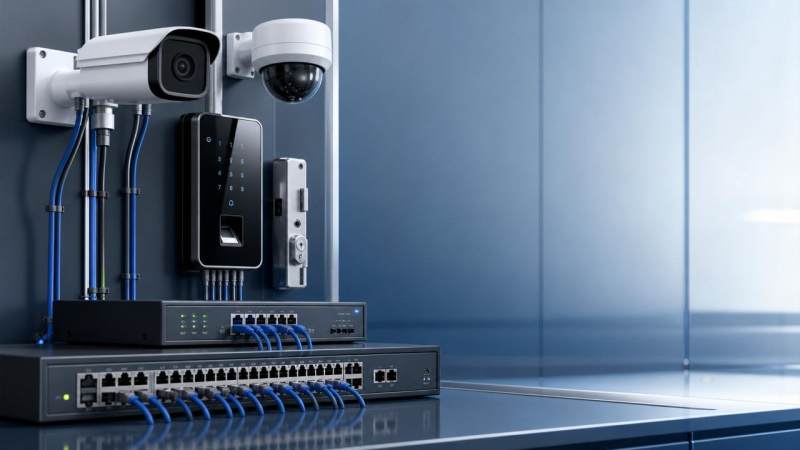
For technical evaluators navigating fast-changing infrastructure and public safety demands, digital security standards are no longer optional benchmarks—they are the foundation of reliable decisions. As global compliance rules, AI-enabled surveillance, and optical technologies continue to converge, understanding which standards truly matter is essential for reducing risk, improving interoperability, and guiding smarter security investments.
The core search intent behind digital security standards is practical, not academic. Readers want to know which standards affect system selection, compliance exposure, interoperability, and long-term operational reliability across security environments.
For technical evaluators, the most important question is simple: which standards materially change procurement decisions, deployment quality, and legal defensibility? The answer is that only a limited set truly shape outcomes.
What Technical Evaluators Are Really Looking For
Most evaluators searching this topic are not looking for broad definitions. They need a usable framework for comparing vendors, validating architectures, and identifying hidden risks before approving surveillance or infrastructure investments.
They are typically balancing four pressures at once: regulatory compliance, cybersecurity resilience, device interoperability, and technology readiness. In public safety, smart buildings, and connected urban environments, these pressures are increasingly linked.
That is why digital security standards matter most when they help answer procurement questions. Can systems exchange data reliably? Can access be controlled and audited? Can evidence stand up under investigation? Can deployments remain compliant as rules evolve?
The Standards That Matter Most in Real-World Security Evaluation
Not every published standard deserves equal weight. For technical evaluation, the highest-value standards are those that affect secure design, interoperability, operational governance, and sector-specific compliance in measurable ways.
At the foundation are information security management standards such as ISO/IEC 27001. This standard matters because it shows whether an organization manages security systematically rather than treating protection as a feature checklist.
For evaluators, ISO/IEC 27001 is rarely enough by itself. It should be read alongside related controls, governance processes, supplier assurance, incident response maturity, and documented evidence of how risks are assessed and reduced.
Next are cybersecurity and industrial environment standards such as IEC 62443, especially where security systems interact with operational technology, building controls, transport infrastructure, or city-scale monitoring environments.
IEC 62443 becomes highly relevant when cameras, sensors, controllers, and communications platforms are no longer isolated products. In smart infrastructure, the real issue is whether digital security is maintained across connected operational layers.
Interoperability standards also deserve priority. In video surveillance and physical security ecosystems, ONVIF plays a major role because it affects cross-vendor compatibility, device discovery, stream management, and long-term integration flexibility.
Evaluators should treat interoperability standards as a hedge against vendor lock-in. A system that appears capable today may create integration costs tomorrow if its compliance is partial, proprietary, or poorly documented.
Identity and access governance standards also matter deeply. Frameworks such as ISO/IEC 27002 controls, zero-trust aligned policies, and strong authentication guidance become central when remote access, cloud dashboards, and shared management platforms are involved.
Where privacy laws intersect with security operations, standards tied to data protection become critical. Depending on jurisdiction, GDPR-related practices, privacy-by-design principles, retention controls, and auditability may influence technical acceptance more than raw device performance.
Finally, sector-specific requirements should never be treated as secondary. Transportation hubs, public safety networks, utility sites, healthcare campuses, and smart construction projects all carry different obligations that reshape evaluation criteria.
Why Compliance Alone Is Not Enough
A common mistake in digital security evaluation is assuming that certification equals security. In reality, a product may reference standards yet still introduce unacceptable risk through weak integration, poor patching, or unclear data handling.
Technical evaluators should therefore distinguish between claimed compliance, verified conformity, and operational fitness. These are related but different. A standards label is useful only when it maps to real controls, tested behaviors, and maintainable processes.
For example, a surveillance platform may support encrypted transmission but still fail basic security expectations if keys are poorly managed, default credentials remain active, or firmware updates are difficult to validate and deploy.
Likewise, a smart lighting or optical communications component may be technically innovative, but if it introduces unmanaged data pathways or undocumented software dependencies, compliance value drops quickly under real deployment conditions.
This is especially relevant as AI vision and visible light communication technologies become more integrated with physical security assurance. The evaluation challenge is no longer only about function; it is about trust boundaries and system behavior.
How to Evaluate Digital Security Standards During Procurement
The most effective approach is to translate standards into decision criteria. Instead of asking vendors whether they comply, ask how compliance is demonstrated, maintained, audited, and affected by updates, integrations, and remote administration.
Start with architecture. Identify where data is created, transmitted, processed, stored, and exported. Then map those stages against applicable digital security standards, privacy obligations, and resilience expectations.
Next, test identity controls. Who can access devices, management consoles, APIs, logs, and exported evidence? Are privileges segmented by role? Is multifactor authentication available? Are administrative actions traceable and reviewable?
Then assess communications security. Check whether encryption is implemented in transit and at rest where relevant, whether certificate management is practical, and whether insecure legacy protocols remain enabled by default.
Interoperability should be validated through scenarios, not brochures. Confirm how devices behave in mixed-vendor environments, whether metadata is preserved across systems, and whether integrations remain stable after updates.
Patch and vulnerability management must also be examined closely. Ask how vulnerabilities are disclosed, how quickly patches are released, how updates are authenticated, and whether support windows align with infrastructure lifecycle expectations.
Logging and forensic readiness are equally important. Technical evaluators should confirm whether logs are tamper-evident, time-synchronized, exportable, and detailed enough to support incident analysis or legal review.
Finally, document operational dependencies. A system may appear compliant but depend on cloud services, third-party libraries, or regional hosting arrangements that change its legal or security profile significantly.
The Overlooked Link Between Physical Security and Digital Security Standards
In older evaluation models, physical security systems and digital security controls were often reviewed separately. That separation is no longer realistic in intelligent surveillance, connected facilities, and adaptive urban safety platforms.
Cameras now run analytics. Access systems connect to cloud platforms. Lighting infrastructure can carry sensing and communications roles. Public safety networks aggregate data from multiple operational domains in near real time.
Because of this convergence, digital security standards now influence physical assurance outcomes directly. If a video system is compromised, evidence integrity, response coordination, and even occupant safety may be affected.
Technical evaluators should therefore treat digital security standards as part of mission assurance. The question is not only whether a system is cyber secure, but whether it remains trustworthy under operational stress and ecosystem change.
This perspective is increasingly important in GSIM-relevant environments, where international compliance laws, optical technologies, and intelligent infrastructure investments intersect across borders and procurement regimes.
How Global Variation Changes Standards Priorities
One reason this topic creates confusion is that standards priorities vary by region, industry, and project type. A platform acceptable in one market may fail in another because privacy rules, evidence rules, or certification expectations differ.
Technical evaluators working across jurisdictions should identify which requirements are global baselines and which are local obligations. This prevents overreliance on generic vendor claims and reduces rework during late-stage approvals.
For multinational projects, it is useful to group standards into four layers: enterprise governance, product security, interoperability, and jurisdiction-specific compliance. This creates a clearer review structure for complex procurements.
It also supports better communication between engineering teams, compliance officers, procurement specialists, and executive stakeholders. Standards become easier to prioritize when they are tied to actual decision risks rather than abstract categories.
What Strong Vendors Do Differently
Vendors that treat digital security standards seriously tend to show consistent behaviors. They provide structured documentation, transparent support policies, secure default configurations, and clear evidence of ongoing security maintenance.
They also explain limitations honestly. Instead of claiming universal compliance, they specify which functions are certified, which integrations require configuration, and which responsibilities remain with the customer or deployment partner.
Strong vendors can usually map standards to architecture, operational controls, and lifecycle practices. They make it easier for evaluators to verify how compliance works in production rather than only in marketing material.
By contrast, weak vendors often rely on vague language such as standards-based, enterprise-grade, or secure by design without showing test results, governance processes, or update accountability. Those gaps should trigger deeper scrutiny.
A Practical Decision Framework for Technical Evaluators
If time is limited, focus on five questions. First, which digital security standards are mandatory for this use case and jurisdiction? Second, which ones directly affect integration and lifecycle costs?
Third, how is compliance evidenced beyond claims? Fourth, what failure modes appear when the system is updated, integrated, or accessed remotely? Fifth, can the solution remain supportable as regulations and infrastructure demands evolve?
This framework helps separate meaningful standards from background noise. It also aligns well with environments where AI surveillance, optical systems, and public safety infrastructure are converging under tighter legal and operational expectations.
For organizations using intelligence-led evaluation methods, this is where strategic insight becomes valuable. Standards should not be tracked as isolated rules, but as signals of technology maturity, procurement risk, and future interoperability strength.
Conclusion: The Standards That Matter Are the Ones That Change Outcomes
For technical evaluators, the most important digital security standards are not the longest list or the most impressive acronyms. They are the standards that reduce uncertainty in architecture, compliance, interoperability, and operational trust.
In practice, that means prioritizing governance standards, industrial and connected-system security frameworks, interoperability requirements, access control disciplines, and jurisdiction-specific privacy or evidence obligations.
As security systems become more intelligent, connected, and optics-enabled, evaluation quality depends on seeing standards as decision tools. When applied correctly, they help prevent lock-in, reduce legal exposure, and improve long-term resilience.
The best evaluation outcome is not simply choosing a compliant product. It is choosing a system that remains secure, defensible, and fit for purpose as infrastructure, threats, and regulations continue to evolve.
The VitalSync Intelligence Brief
Receive daily deep-dives into MedTech innovations and regulatory shifts.