
Security
PPE Export Prices Rise, Pressuring Safety Lighting Buys
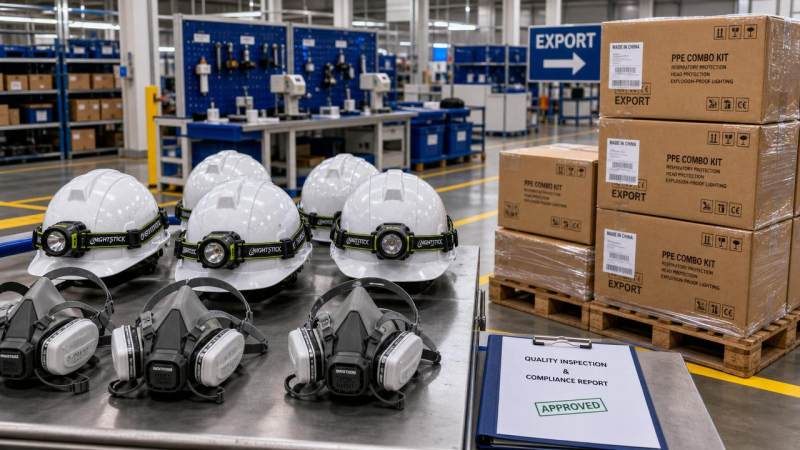
On June 1, 2026, the latest price movement in exported personal protective equipment signaled more than a routine market fluctuation. A reported year-on-year rise in average export prices for respiratory PPE, together with a parallel increase in quoted prices for integrated safety lighting products, points to a practical rule-of-execution change for procurement, tender budgeting, delivery planning, and compliance document review across export-oriented PPE supply chains. This matters because the impact has already reached tender budget adjustments in emerging markets, meaning manufacturers, exporters, buyers, and certification-related service providers may need to reassess how composite PPE products are priced, documented, and delivered.
What the latest weekly price release confirms
According to the 2026 Global PPE Price Dynamics Weekly Report released by CCCMHPIE on June 5, the average export price of China’s respiratory protective PPE in the first week of June increased by 12.3% year on year. The reported drivers were tighter supply of high-barrier melt-blown fabric and smart exhalation valve chips. The same release indicated that export unit prices for composite PPE products, including integrated explosion-proof lighting headlamps and safety helmets combining respiratory and lighting functions, also rose by 8.7%. It further stated that this increase has already been transmitted into tender budget adjustments in emerging markets in Southeast Asia and Latin America.
Where the pressure is likely to appear first
Export quotations are becoming harder to separate from component constraints
From an industry perspective, exporters of respiratory PPE and composite protective equipment are likely to feel the impact first because the reported price increase is linked directly to tighter supply of named upstream components. In practical terms, this can affect quotation validity periods, contract negotiation, and the consistency between technical configurations and commercial offers. What deserves closer attention is whether product specifications, supporting technical documents, and bid submissions remain aligned when pricing changes reach integrated products rather than standalone respiratory items.
Procurement teams may need to revisit tender and sourcing assumptions
Buyers and procurement teams may be affected because the reported increase has already fed into tender budget adjustments in emerging markets. The immediate business impact is likely to appear in budget recalibration, supplier comparison, and purchase timing for products that combine respiratory protection with safety lighting. Analysis shows that procurement teams should pay closer attention to whether bid documents, product descriptions, and delivery commitments still match available supply conditions, especially when the purchased item is a bundled or function-integrated PPE product.
Manufacturing and assembly schedules could face tighter coordination demands
Manufacturers and assemblers of integrated PPE equipment may be affected where respiratory components and safety lighting modules are sourced through different channels but sold as one compliance-sensitive product. The pressure may show up in material planning, production scheduling, and outbound delivery coordination. Observably, the more integrated the product form, the more important it becomes to keep purchasing records, technical files, and shipment documents consistent with the final delivered configuration.
Certification and testing support functions may see closer document scrutiny
Certification-related companies, testing service providers, and compliance support teams may not be the direct cause of the price change, but they can become more relevant as buyers and exporters seek to confirm that product claims and technical documentation remain accurate after cost-driven sourcing adjustments. The issue is less about a confirmed new rule and more about execution discipline: when integrated PPE products are repriced or reconfigured, supporting materials such as test references, technical data, and bid attachments may require closer review to avoid inconsistencies during procurement or delivery.
What companies should monitor now
Check whether technical files still match quoted configurations
Analysis shows that companies selling integrated respiratory and lighting products should pay close attention to whether product descriptions, specifications, and supporting technical materials continue to reflect the actual export configuration after price adjustments. This is especially relevant when upstream tightness affects key materials or components tied to performance claims.
Watch for changes in tender wording and budget treatment
Because the reported increase has already reached tender budget adjustments in some emerging markets, companies should monitor whether procurement documents begin to reflect revised pricing assumptions, narrower technical options, or closer review of bundled product functions. At this stage, it is more appropriate to understand this as a live procurement signal rather than a fully standardized market rule.
Reassess delivery planning for integrated PPE categories
Observably, products that combine respiratory protection and safety lighting may require closer coordination between component sourcing and delivery commitments. Exporters and supply chain teams should therefore watch for changes in lead time expectations, order confirmation practice, and supplier readiness, while avoiding assumptions that earlier pricing or supply terms will continue unchanged.
Keep traceability and supporting documents ready for review
What deserves closer attention is the consistency of commercial and compliance documentation when export prices move quickly. Companies may need to organize quotations, product specifications, test-related materials, and shipment records more carefully so that tender reviews, customer audits, or after-sales questions can be addressed without contradiction.
Why this should be read as an execution signal
Analysis shows that this development is best understood not as a new formal regulation in itself, but as an execution-level signal affecting how trade, procurement, and compliance are carried out in the PPE sector. The reported transmission into tender budget adjustments suggests that market participants are already responding in operational terms. At the same time, it would be premature to treat the current movement as a settled long-term rule change. Continued attention is needed on procurement practice, documentation requirements, certification interpretation, and buyer feedback as the market absorbs the higher pricing for respiratory and composite PPE products.
How to read the current change
The current development is most appropriately understood as a practical market and trade signal with compliance implications, rather than a standalone policy announcement. Its significance lies in the way upstream component tightness is now influencing export pricing, composite PPE procurement, and tender execution in downstream markets. A rational reading is that companies should not overstate the event, but they also should not treat it as isolated price noise, because it already appears to be affecting budget decisions and operating assumptions in cross-border PPE business.
Source basis and points still requiring verification
This article is generated based on the user-provided news title, event date, and event summary. For developments of this kind, commonly relevant source types include official notices, releases from regulatory authorities, customs or trade administration information, industry association publications, standards organization documents, and reporting by authoritative media. A specific official source link was not provided in the input and should therefore be verified on an ongoing basis. Further observation is still needed regarding later rule interpretation, certification practice, tender document changes, industry feedback, and how companies implement related procurement and delivery adjustments.
The VitalSync Intelligence Brief
Receive daily deep-dives into MedTech innovations and regulatory shifts.