
Security
AI Vision for Industrial Security: Where It Cuts False Alarms
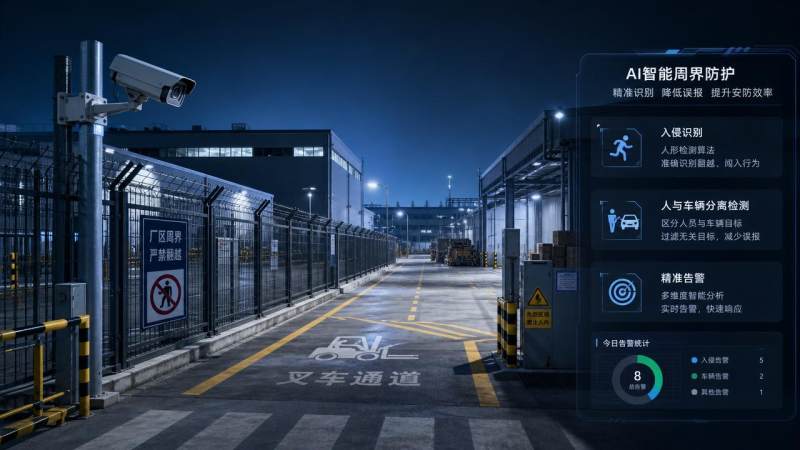
As industrial sites scale up digital monitoring, AI vision for industrial security is becoming essential for reducing false alarms without slowing response. For technical evaluators, the real question is not whether AI can detect risk, but where it performs reliably across complex lighting, motion, and compliance conditions. This article examines the scenarios, limits, and decision factors that matter most.
Why false alarms remain the real cost center in industrial security
In industrial security, false alarms rarely stay inside the video system. They trigger guard dispatch, interrupt operations, overload incident logs, and reduce trust in the monitoring stack. For technical evaluation teams, that means the value of AI vision for industrial security is measured less by raw detection volume and more by decision quality.
The challenge is that industrial sites combine unstable lighting, reflective materials, heavy machinery, restricted areas, weather exposure, and mixed human-vehicle movement. Rule-based analytics often treat these variables as suspicious activity. AI models improve this, but only when the optical environment, camera position, and event logic are aligned with the site.
- Perimeter zones generate nuisance alerts from shadows, vegetation motion, headlights, and rain.
- Warehouses create confusion between authorized forklift routes and human intrusion paths.
- Construction and utility sites face frequent scene changes that weaken static alarm rules.
- Critical infrastructure must balance fast alerts with auditability, privacy, and compliance controls.
This is where GSIM provides practical value. Its Strategic Intelligence Center connects surveillance policy, optical design trends, and procurement intelligence, helping evaluators judge not only whether a system can detect events, but whether it can sustain useful detection under real deployment conditions.
Where AI vision for industrial security cuts false alarms most effectively
Not every industrial scene benefits equally. AI vision for industrial security performs best where event categories are narrow, scene geometry is stable, and illumination can be managed. In these cases, the model can separate normal activity from meaningful risk with a lower nuisance rate.
High-return scenarios for technical evaluators
- After-hours perimeter intrusion detection in fenced or clearly bounded areas.
- Human detection around hazardous zones where machinery access should be restricted.
- Vehicle-person separation monitoring in yards, loading areas, and logistics corridors.
- PPE and behavior checks in defined entry points rather than across open, crowded floors.
- Smoke, flame, or occupancy anomalies where camera perspective and lighting are consistent.
The common pattern is controlled context. When the site can define what normal motion looks like, AI video analytics can reject many false triggers that basic motion detection would escalate. That improves operator efficiency and response discipline.
The table below helps technical evaluators compare where AI vision for industrial security usually delivers stronger false alarm reduction and where extra validation is needed.
The key takeaway is not that AI works everywhere in the same way. It works best where the evaluator can control scene variables, define event boundaries, and verify model behavior against actual operating patterns.
What technical evaluators should test before approving deployment
A frequent procurement mistake is to evaluate AI video analytics only through demo clips or lab conditions. Industrial deployment demands more. Technical evaluators should test whether the system maintains detection quality across lighting transitions, environmental noise, and operational exceptions.
Critical test dimensions
- Day-night consistency. Test dawn, dusk, glare, backlight, and supplemental lighting conditions.
- Object classification stability. Confirm whether the system reliably separates people, vehicles, and irrelevant motion sources.
- Occlusion tolerance. Measure behavior when targets are partially blocked by racks, equipment, or structural elements.
- Alert logic design. Review whether event rules depend only on motion or combine zone, dwell time, direction, and schedule.
- Edge and network performance. Check latency, frame loss, and whether analytics continue during bandwidth constraints.
- Audit and integration readiness. Verify event logging, exportability, and compatibility with VMS, access control, and incident workflows.
For many sites, the camera is not the only variable. Illumination quality directly affects AI performance. Overexposure, contrast collapse, and uneven light distribution can turn a strong model into an unstable detector. This is one reason GSIM’s optical environment perspective matters. Security intelligence and lighting intelligence should be assessed together, not in separate procurement tracks.
Which technical parameters matter most when false alarm reduction is the goal
When teams compare solutions, they often focus on resolution and advertised AI functions. Those matter, but they do not explain false alarm performance on their own. The more decisive factors are scene fit, event logic, and optical stability.
The parameter guide below supports a more realistic assessment of AI vision for industrial security in cross-industry industrial sites.
For evaluators, this table reinforces a practical point: false alarm reduction is a system outcome, not a checkbox feature. Procurement documents should therefore request validation evidence by scene type, not only a list of AI functions.
How AI vision compares with conventional video analytics in industrial sites
Conventional analytics still have value. In stable and simple environments, they are predictable, lightweight, and often cheaper to deploy. But once the scene includes variable motion, mixed objects, or changing light, conventional rules reach their limit quickly.
Decision comparison for procurement teams
- Use conventional analytics for narrow trigger tasks such as fixed line crossing in well-lit, low-variance zones.
- Use AI vision for industrial security when object classification and scene interpretation matter more than simple movement detection.
- Use hybrid logic when a site needs both low compute overhead and higher event precision in selected zones.
A hybrid strategy is often the most defensible option for technical evaluators working with budget limits. High-priority areas can receive AI-enabled detection, while low-risk or highly stable areas continue using traditional logic. This staged approach reduces cost and deployment risk.
What compliance and standards questions should not be overlooked
In 2026 and beyond, industrial surveillance is shaped not only by performance targets but also by legal interpretation, data governance, and infrastructure policy. Technical evaluators must ask how event data is stored, who can access it, and how long it is retained. These issues become more sensitive in public safety, critical facilities, and multinational operations.
Compliance checkpoints worth including
- Does the deployment align with local electronic surveillance and privacy rules?
- Can the system support role-based access, export logs, and incident traceability?
- Are lighting and image conditions sufficient to support the claimed detection logic without excessive monitoring of irrelevant activity?
- Will cross-border operations require different retention, encryption, or evidence handling settings?
GSIM’s Strategic Intelligence Center is especially relevant here because it bridges global security policy and optical technology trends. For evaluators comparing vendors across regions, that intelligence can reduce the risk of selecting a technically strong solution that later faces compliance friction or redesign costs.
Common misconceptions about AI vision for industrial security
“More cameras automatically mean fewer false alarms.”
Coverage expansion helps only if camera placement and event logic are coherent. Poorly positioned cameras simply create more low-quality data and more alert noise.
“A higher resolution camera will solve detection problems.”
Resolution improves detail, but it does not fix glare, occlusion, unstable light, or weak rule design. Optical environment quality is often the larger variable.
“AI can be evaluated from a generic demo.”
Industrial security performance is scene dependent. A valid evaluation needs site-like conditions, including real light transitions, vehicle movement, and operational exceptions.
“False alarms are only a software problem.”
In practice, false alarms often arise from the combined effect of poor lighting, unsuitable optics, unstable networks, and mismatched expectations between operations and procurement.
FAQ: procurement and deployment questions technical evaluators ask most
How should we choose AI vision for industrial security for mixed indoor and outdoor sites?
Start by splitting the site into risk zones rather than buying one uniform architecture. Outdoor perimeters need stronger weather and low-light validation. Indoor logistics zones need better person-vehicle separation and occlusion handling. A zone-based design usually produces more stable alarm performance than a one-size-fits-all rollout.
What should we prioritize if the budget is limited?
Prioritize zones where false alarms create the highest operational cost or safety exposure. Then improve illumination and placement before expanding analytics scope. In many projects, correcting lighting and scene design yields faster gains than adding more channels of AI.
How long does evaluation usually take before procurement approval?
A credible review often requires a phased check: site survey, rule design, limited pilot, and performance review across several operating conditions. The exact timeline depends on site complexity, but evaluators should allow enough time to observe day-night changes and routine operational variation.
What indicators show that a pilot should not move directly into full rollout?
Warning signs include repeated nuisance alerts in the same weather pattern, unstable classification under headlights or backlight, heavy dependence on manual filtering, and unclear evidence trails for incident review. These suggest the scene design or logic model needs adjustment before scale-up.
Why decision support matters more as industrial monitoring becomes more complex
The next phase of industrial monitoring will not be defined by camera quantity alone. It will be shaped by how well organizations combine AI vision, optical environment control, compliance interpretation, and infrastructure planning. As Visible Light Communication and AI-driven sensing continue to converge, technical evaluators will need broader intelligence than product brochures can provide.
GSIM is positioned for that role. By linking sector news, policy interpretation, trend forecasting, and commercial insights, it helps decision-makers assess where AI vision for industrial security delivers measurable value and where site conditions or standards require a different strategy.
Why choose us for evaluation support and next-step planning
If you are assessing AI vision for industrial security, GSIM can support the technical and procurement questions that usually slow approval. Our focus is not limited to hardware exposure. We help connect risk scenarios, optical conditions, and compliance expectations so your team can make a more defensible decision.
- Confirm key parameters for target scenes, including lighting conditions, detection distance, and event logic assumptions.
- Compare solution paths for perimeter control, hazardous area monitoring, warehouse movement analysis, and public safety integration.
- Review likely delivery considerations such as pilot scope, deployment sequence, and integration dependencies.
- Discuss custom strategy options for different regions, operating environments, and compliance expectations.
- Request guidance on certification and regulatory alignment relevant to surveillance and optical system deployment.
- Open quotation discussions with clearer technical baselines, reducing mismatched expectations during procurement.
For teams that need clearer selection criteria, more reliable scene evaluation, or better alignment between monitoring performance and industrial reality, GSIM offers a practical starting point for consultation.
The VitalSync Intelligence Brief
Receive daily deep-dives into MedTech innovations and regulatory shifts.