
Security
Security Optimization: 7 Fixes That Improve Response Time Fast
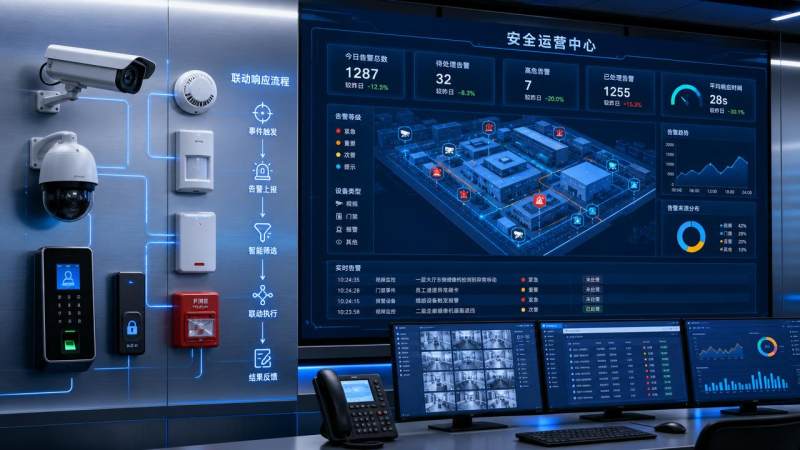
Security optimization is no longer optional for operators managing fast-moving, high-risk environments. When response time slips, exposure rises across surveillance, access control, and site coordination. This guide breaks down 7 practical fixes that help improve reaction speed quickly, reduce operational friction, and support smarter decision-making in modern security workflows.
For most operators, the real search intent behind security optimization is simple: find actions that improve response time now, without waiting for a full system replacement. They want practical fixes, fewer delays, and clearer decisions under pressure.
What matters most is not theory. Operators need to know where time is lost, which adjustments create immediate gains, and how to improve security workflows across cameras, alarms, lighting, communication, and escalation routines.
This article focuses on fast, field-relevant improvements. It emphasizes usable fixes, response bottlenecks, and decision speed. It avoids generic high-level talk unless it helps operators act with more confidence and less friction.
Why response time is the first metric to improve
In live security operations, slow response is rarely caused by one major failure. More often, it comes from stacked inefficiencies: unclear alerts, poor visibility, weak escalation rules, overloaded screens, and inconsistent communication.
That is why security optimization should begin with response time. Faster awareness, faster verification, and faster action reduce exposure before an event grows into a safety, compliance, or operational problem.
For operators, every extra minute can mean missed intrusion windows, delayed incident containment, confused dispatching, or lost evidence. Improving speed does not always require expensive upgrades. Often, it starts with workflow correction.
A good optimization mindset asks three questions: What slows detection? What slows decision-making? What slows action after the decision? These three stages reveal where most practical improvements can be made quickly.
1. Reduce alarm noise before adding more technology
One of the biggest response killers is alarm overload. If operators face too many low-value alerts, they gradually respond slower, verify less accurately, or miss the alert that actually matters.
Security optimization often fails when teams add devices without reducing false positives. More sensors and more camera analytics only help if the alert stream becomes clearer, not noisier.
Start by reviewing alarm categories over the last 30 to 90 days. Identify repeated nuisance triggers such as environmental motion, poor detection zones, duplicated notifications, or low-priority events treated as urgent.
Then rank alarms by operational consequence. A forced-door event at a restricted entry should not compete visually or acoustically with a routine access anomaly that can wait for manual review.
Operators benefit most when the system supports triage automatically. Use priority labels, color coding, confidence scoring, and event grouping so one incident appears as one manageable case, not ten disconnected alerts.
Even a modest reduction in false or duplicate alarms can improve reaction speed immediately. Teams spend less time clearing noise and more time validating events that require intervention.
2. Rebuild camera views around decision points, not coverage maps
Many surveillance layouts are designed for broad visibility, but operators make decisions at specific moments. They need fast confirmation of entry, direction, behavior, identity cues, and nearby risk conditions.
If camera placement only maximizes area coverage, response time suffers. Operators may see movement, but they cannot quickly confirm whether the event is real, where it is heading, or what action is appropriate.
To improve security optimization outcomes, review your most common incident types: tailgating, perimeter breach, unauthorized entry, equipment theft, congestion, or after-hours movement. Then check whether current camera views support immediate verification.
Critical views should answer operational questions within seconds. Can the operator verify the event? Can they assess scale? Can they identify the path of movement? Can they support dispatch with useful location details?
Where possible, create linked views. A door alarm should automatically present the nearest verification camera, plus one wider situational camera. This reduces search time and avoids the delay of manual camera hunting.
Operators also benefit from naming consistency. Camera titles, maps, and incident logs should use the same location language. Conflicting labels waste time during high-pressure moments and create avoidable communication errors.
3. Improve lighting conditions to speed up recognition and verification
Response time is not just a software issue. Optical conditions directly affect how quickly an operator can interpret a scene. Poor lighting, glare, deep shadows, and overexposed entrances increase hesitation and misreads.
This is especially important in mixed indoor-outdoor environments, loading areas, public access zones, parking edges, and transition corridors. If visibility changes sharply, camera footage becomes slower to read and harder to trust.
From a security optimization perspective, better illumination often delivers faster gains than adding another device. Clearer scenes improve analytics performance, operator confidence, and the quality of evidence during review.
Focus first on operational hotspots: gates, vestibules, delivery points, blind corners, and badge checkpoints. Ask whether current light supports fast human recognition, not just minimum environmental brightness.
Watch for common issues such as backlit doors, reflective surfaces, inconsistent color rendering, and nighttime hotspots that wash out faces or plates. These conditions create unnecessary verification delays.
GSIM’s industry view is increasingly clear: physical security assurance and optical environment optimization now work best as one discipline. Better visual conditions lead to faster interpretation, smarter escalation, and stronger incident control.
4. Standardize escalation paths so operators do not improvise under pressure
Many incidents are detected quickly but handled slowly because escalation is unclear. Operators may know something is wrong, yet still lose time deciding who to call, what threshold applies, or what evidence must be shared.
That is why one of the fastest security optimization fixes is procedural, not technical. Build response pathways that reduce choice under pressure and make the next action obvious.
Each major event type should have a short escalation logic: what happened, what confirms it, who owns the next action, and when the incident changes priority. This logic should be visible inside the workflow, not buried in a manual.
For example, a perimeter alert may require video verification within 30 seconds, guard dispatch within one minute if confirmed, and supervisor notification only if movement continues or a protected zone is reached.
Simple response matrices can save critical time. They also reduce inconsistent handling across shifts, sites, or experience levels. Operators should not have to rely on memory when workload spikes.
If your operation includes third parties, include them in the escalation map. Security, facilities, site management, local responders, and remote monitoring teams must share the same trigger language and status expectations.
5. Cut interface friction in the control room
Operators lose time when they move across too many screens, windows, passwords, maps, and disconnected tools. Even strong personnel perform slowly when the interface makes basic actions take too many steps.
Security optimization should therefore include a usability review. Measure how long it takes an operator to acknowledge an alert, pull the right camera, check access logs, contact support, and record the action.
If these tasks require constant switching between systems, look for integration or simplification opportunities. Single sign-on, event-linked camera pop-ups, mapped device status, and one-click communication tools all reduce friction.
Screen design also matters. Put high-priority queues where the eye lands first. Remove low-value clutter. Standardize icon meanings. Use layouts that support fast scanning during normal workload and surge conditions.
Do not underestimate small changes. Renaming device groups, reducing duplicate tabs, or repositioning alert panels can noticeably improve operator speed because they reduce cognitive load in repeated tasks.
A practical test is to observe one live shift and note every unnecessary click, search, or verbal clarification. Those moments often reveal the hidden delays that no system brochure mentions.
6. Strengthen communication loops between detection, dispatch, and closure
Fast detection means little if the message passed to responders is incomplete, delayed, or inconsistent. Many operations lose time after verification because the handoff from monitoring to action is weak.
For operators, the goal is not just to spot incidents quickly but to transfer clean, decision-ready information. Dispatch needs exact location, event type, confidence level, current visual status, and any evolving risk indicators.
Create a standard incident communication format. It should be brief enough for speed but structured enough to avoid confusion. For example: location, trigger, verification status, suspect direction, access condition, and required response.
Closed-loop communication is equally important. The operator should know when the message was received, when the responder is on route, and when the scene is secured or reclassified.
This feedback loop improves more than timing. It improves accountability, record quality, and post-incident learning. It also helps operators avoid duplicate escalations caused by uncertainty about whether action has started.
If radio, mobile, and platform messaging coexist, define which channel is primary for which event class. Mixed communication methods without rules often create silent delays and contradictory updates.
7. Train for speed using real scenarios, not only compliance checklists
Many teams conduct training, but not all training improves response time. Compliance-based instruction may explain policy correctly while still leaving operators slow during real, ambiguous, high-pressure events.
To make security optimization sustainable, train against the exact moments where speed breaks down: uncertain video, overlapping alarms, partial access data, difficult lighting, and unclear responder availability.
Use short scenario drills built from actual incident patterns. Include routine disruptions, not only rare extreme threats. Operators improve fastest when training reflects the messy conditions they face every week.
Time the drill stages separately: detection, verification, escalation, dispatch, documentation, and closure. This helps supervisors identify where the delay really occurs instead of assuming the entire team is simply “too slow.”
Post-drill reviews should stay practical. Ask what information was missing, what screen caused delay, what wording created confusion, and what decision threshold felt unclear. Then update the workflow, not just the training notes.
Over time, scenario-based practice builds calm pattern recognition. Operators become faster because they recognize signal, trust the process, and know exactly what to do next.
How to prioritize these fixes when you cannot do everything at once
Most operators work within budget, staffing, and technology constraints. The best approach is to sequence fixes by operational impact and speed of implementation rather than trying to redesign the whole environment at once.
Start with the issues that repeatedly slow live action: alarm noise, poor camera-event linking, unclear escalation, or communication delays. These usually deliver faster gains than major hardware expansion.
Next, address visibility conditions and interface friction. These changes can significantly improve confidence and consistency, especially in multi-zone or high-traffic environments where operators make frequent verification decisions.
Finally, support the improvements with scenario training and measurement. Without reinforcement, teams often drift back into slower habits even after system adjustments are made.
A useful rule is this: if a fix reduces repeated operator hesitation, it is likely worth prioritizing. The aim of security optimization is not complexity. It is clearer signal, faster judgment, and more reliable action.
What to measure after making changes
If you want to know whether response time has truly improved, track more than one metric. Average incident duration alone can hide important progress or ongoing failure points.
Measure alert-to-acknowledgment time, alert-to-verification time, verification-to-dispatch time, and dispatch-to-closure time. These reveal where the workflow improved and where friction still remains.
You should also monitor false alarm rate, duplicate event count, operator workload per shift, and incident reopening frequency. These indicators show whether speed is increasing in a controlled and sustainable way.
Qualitative feedback matters too. Ask operators which changes reduced confusion most, which screens still slow them down, and which event types remain hard to verify. Operational insight often appears there first.
For organizations following evolving global standards and procurement expectations, these measurements also support better reporting, stronger compliance posture, and smarter future investment decisions.
Conclusion: fast security optimization starts with fewer delays, not more complexity
The most effective security optimization work is often practical and immediate. Operators do not need abstract transformation plans first. They need fewer false alarms, clearer views, better lighting, simpler escalation, smoother tools, and stronger communication.
These seven fixes improve response time because they target where delay actually lives: in noise, uncertainty, poor visibility, fragmented systems, and unclear decisions. When those issues are reduced, speed improves naturally.
For users and operators, the value is direct. Faster verification supports safer outcomes. Faster dispatch reduces exposure. Better incident handling lowers friction across the whole workflow and improves trust in the system itself.
In modern environments shaped by digital infrastructure upgrades and rising safety expectations, response speed is a core operational advantage. Security optimization works best when technology, process, and optical conditions are aligned around action.
The clearest next step is to review your last month of incidents and identify where the first avoidable delay happened. That single exercise often shows exactly which fix will deliver the fastest improvement.
The VitalSync Intelligence Brief
Receive daily deep-dives into MedTech innovations and regulatory shifts.