
Security
Guangdong-Hong Kong-Macao GBA Trade Data to Be Released as Single Entity
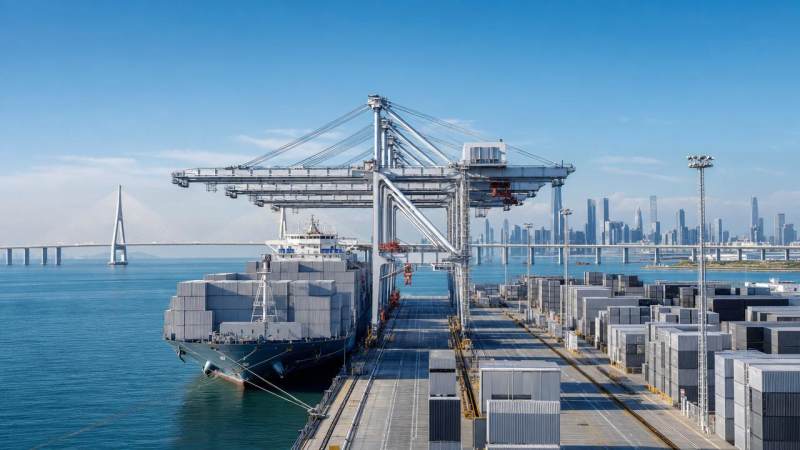
On May 24, China’s General Administration of Customs announced it will jointly develop and release, in coordination with Hong Kong and Macao authorities, the first integrated foreign goods trade statistics for the Guangdong-Hong Kong-Macao Greater Bay Area (GBA). The dataset will explicitly include细分 categories such as smart security equipment, LED industrial lighting, and fire emergency lighting. This development is particularly relevant for enterprises in security systems, lighting manufacturing, export trading, and cross-border supply chain services — as it introduces a new, region-level visibility metric for overseas buyers assessing production concentration, delivery reliability, and export capacity.
Event Overview
On May 24, the General Administration of Customs of the People’s Republic of China stated it would collaborate with Hong Kong and Macao to research, compile, and release unified external merchandise trade statistics for the Guangdong-Hong Kong-Macao Greater Bay Area. The official announcement confirmed that the dataset will cover specific subcategories including smart security devices, LED industrial lighting, and fire emergency lighting fixtures. No further implementation timeline or data frequency has been disclosed publicly.
Industries Affected
Export-oriented trading enterprises: These firms — especially those headquartered or operationally anchored in the GBA — may see increased inbound inquiry volume from EU, Middle Eastern, and Latin American procurement teams seeking consolidated sourcing intelligence. Their exposure to buyer due diligence on regional production scale and logistics coherence is likely to rise.
Lighting and security equipment manufacturers: Producers of LED industrial lighting and smart security hardware within the GBA will be directly represented in the new statistical口径. Their output contributes to aggregated metrics on export volume, destination distribution, and product-category growth — potentially influencing how international buyers benchmark supplier clusters.
Supply chain and logistics service providers: Entities offering warehousing, customs brokerage, or multimodal transport across Shenzhen, Dongguan, Guangzhou, and Zhuhai may face heightened demand for documentation transparency and regional performance reporting — as buyers align procurement decisions with the newly published GBA-wide trade indicators.
What Relevant Enterprises or Practitioners Should Focus On
Monitor official terminology and scope definitions
Watch for subsequent technical notes or consultation documents from the General Administration of Customs specifying whether the dataset covers only FOB exports, includes re-exports via Hong Kong, or excludes intra-GBA transfers. Terminology clarity will determine how directly individual company shipments map to the headline figures.
Track inclusion criteria for priority subcategories
Confirm whether ‘smart security equipment’ encompasses IoT-enabled surveillance hardware only, or also includes supporting components (e.g., AI inference chips, thermal imaging modules). Similarly, verify if ‘LED industrial lighting’ covers both finished luminaires and OEM/ODM lighting engines — as classification boundaries affect eligibility for visibility in the report.
Distinguish policy signal from operational impact
This initiative is a statistical coordination effort, not a regulatory change or tariff adjustment. It does not alter customs procedures, export licensing, or compliance requirements. Enterprises should avoid conflating data publication with new obligations — unless follow-up notices indicate otherwise.
Prepare for buyer-facing communication needs
Anticipate requests from international procurement teams asking how a company’s shipments contribute to the reported GBA totals. Maintaining internal alignment between export records (by HS code, destination, and port of exit) and the forthcoming public dataset will support responsive, credible client engagement.
Editorial Observation / Industry Perspective
Observably, this move signals an institutional effort to reinforce the GBA’s identity as a coherent export hub — rather than a collection of separate provincial economies. Analysis shows the inclusion of security and lighting subcategories reflects their established role in GBA manufacturing specialization, not a sudden strategic pivot. Current implementation remains at the research-and-compilation stage; no data series has yet been published. From an industry perspective, this is best understood as a visibility-enhancing framework under development — one that may gradually shape sourcing expectations but does not yet constitute a functional market lever.
Conclusion
This initiative introduces a novel statistical lens for evaluating the GBA’s collective export profile — with tangible relevance for security, lighting, and integrated supply chain stakeholders. Its immediate value lies in improved external perception and benchmarking potential, not operational change. At present, it is more accurately interpreted as a foundational step toward regional data harmonization, rather than a fully realized trade intelligence tool.
Source Attribution
Primary source: Announcement by the General Administration of Customs of the People’s Republic of China, issued May 24.
Note: The timing of the first dataset release, methodological details, and coverage boundaries remain unconfirmed and are subject to ongoing intergovernmental coordination.
The VitalSync Intelligence Brief
Receive daily deep-dives into MedTech innovations and regulatory shifts.