
Security
Digital Lighthouse for Critical Infrastructure Risks
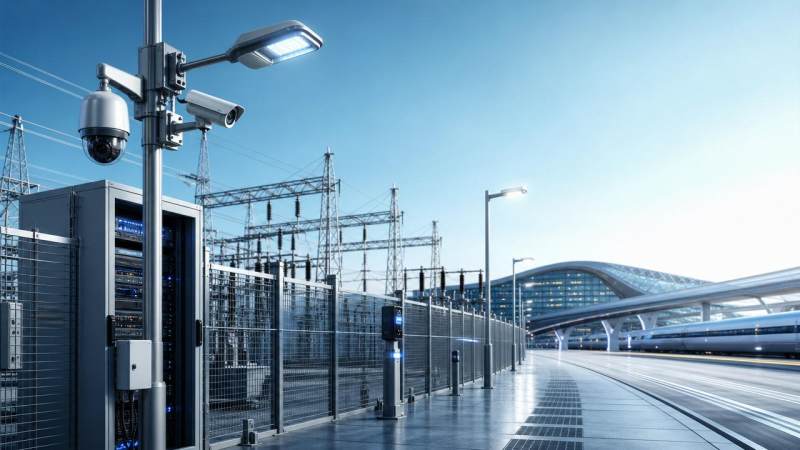
In an era of accelerating urban upgrades and rising security demands, a digital lighthouse for critical infrastructure helps project leaders navigate risk, compliance, and technology choices with greater confidence. GSIM connects global security intelligence, optical innovation, and procurement insight to support smarter planning, stronger protection, and future-ready infrastructure decisions.
For project managers and engineering leaders, the challenge is rarely a lack of hardware options. The real difficulty lies in selecting systems that remain compliant across jurisdictions, perform reliably under operational stress, and fit procurement timelines that often run from 4 weeks to 12 months.
This is where a digital lighthouse for critical infrastructure becomes practical rather than abstract. It functions as a decision-support layer that combines policy interpretation, optical environment planning, security technology evaluation, and commercial insight into one operational view.
GSIM is positioned for this role. Its Strategic Intelligence Center links global security policy updates, AI vision trends, Visible Light Communication development, and buyer-side procurement signals. For teams managing transport hubs, smart construction sites, utilities, campuses, or public safety zones, that integration reduces blind spots at the planning stage.
Why Critical Infrastructure Projects Need a Digital Lighthouse
Critical infrastructure projects operate under layered pressure. A single program may need to satisfy 3 to 5 stakeholder groups at once: owners, regulators, EPC contractors, technology suppliers, and operations teams. When security design and optical performance are handled separately, delivery risk increases.
A digital lighthouse for critical infrastructure creates a shared reference point. Instead of comparing devices in isolation, teams can map surveillance coverage, lighting quality, compliance obligations, cybersecurity exposure, and maintenance workload in one framework before tender release.
The shift from equipment selection to risk-governed planning
In earlier project cycles, buyers often evaluated cameras, luminaires, poles, network cabinets, or edge processors as separate packages. Today, integration matters more. A camera with strong sensor specifications may still fail project goals if glare, low-uniformity lighting, or poor network resilience reduce usable image quality by 20% to 40%.
The same logic applies to compliance. Electronic surveillance rules, retention requirements, and cross-border data responsibilities can affect system architecture in the first 2 design phases. If those questions are delayed until installation, redesign costs and approval delays become much harder to absorb.
Key operational pressures project teams face
- Compressed implementation windows, often 6–16 weeks for phased site deployment
- Mixed technology stacks involving CCTV, perimeter detection, smart lighting, and access control
- Variable site conditions such as dust, fog, vibration, and 24/7 traffic flow
- Cross-functional approvals requiring legal, procurement, engineering, and operations sign-off
The table below shows how project risk changes when decision-making is guided by a digital lighthouse for critical infrastructure rather than by isolated component comparison.
The practical takeaway is clear: better infrastructure outcomes come from combining security, optical, and commercial intelligence at the beginning, not at the end. That is the value proposition behind GSIM’s Strategic Intelligence Center.
How GSIM Supports Smarter Infrastructure Decisions
GSIM is not just a directory of products or vendors. It acts as a working intelligence environment for project leaders who need to compare standards, monitor trend shifts, and understand how new technologies affect design, procurement, and delivery decisions across multiple markets.
Its value becomes strongest in 3 recurring scenarios: when a project is entering specification definition, when international sourcing creates compliance uncertainty, and when optical performance directly affects security assurance in high-traffic or low-visibility environments.
1. Strategic Intelligence Center for policy and market visibility
The Strategic Intelligence Center helps teams track changes in surveillance regulation, procurement trends, and sector-specific deployment patterns. For projects spanning 2 or more jurisdictions, this reduces the risk of selecting technologies that later require legal redesign or operational restriction.
Latest Sector News supports early scanning. Evolutionary Trends helps managers evaluate where AI vision, optical sensing, and VLC may realistically enter deployment roadmaps over the next 12 to 36 months. Commercial Insights adds a procurement lens, especially useful for public safety and smart construction programs.
2. Optical environment optimization as a security multiplier
Many infrastructure projects underestimate the relationship between lighting conditions and security system effectiveness. In practice, uneven illumination, excessive backlight, and poor vertical illuminance can undermine recognition quality even when camera resolution appears sufficient on paper.
By linking optical environment planning with surveillance goals, a digital lighthouse for critical infrastructure improves specification quality. Typical review variables include lux range, uniformity ratio, glare control, color rendering needs, mounting height, and the distance between lighting and imaging assets.
Typical optical planning checkpoints
- Define the scene objective: detection, recognition, or forensic review
- Measure baseline environmental conditions during day and night cycles
- Align lighting output and beam spread with camera field of view
- Validate maintenance access and component replacement intervals, often 12–24 months
- Recheck system behavior in rain, fog, dust, or high-reflectance zones
The next table outlines common project scenarios where a digital lighthouse for critical infrastructure can guide optical and security planning more effectively.
These examples show that the platform’s role is not limited to surveillance compliance. It also helps project teams translate environmental realities into more accurate technical requirements and procurement priorities.
3. Procurement intelligence for engineering leaders
Procurement risk often appears in 4 forms: unsuitable specifications, long lead-time components, inconsistent vendor interpretation, and hidden lifecycle cost. A digital lighthouse for critical infrastructure helps reduce all four by improving visibility before RFQ release.
Commercial Insights is especially useful when supply conditions shift. For example, certain optical, networking, or enclosure components may move from an 8-week to a 20-week lead time. If project teams see this early, they can rebalance package priorities or approve alternates without disrupting milestones.
Selection Criteria Project Managers Should Use
Choosing a digital lighthouse for critical infrastructure is not only about data access. Project leaders should evaluate whether the platform can support real decision points across feasibility, design, procurement, deployment, and operations. In most programs, 5 criteria matter more than interface design alone.
Coverage depth across security, optical, and commercial layers
A useful platform should connect at least 3 knowledge layers: regulatory interpretation, technical environment guidance, and market procurement insight. If any one layer is missing, teams may still face fragmented decision-making and duplicate review cycles.
Usability for cross-functional teams
Project managers rarely work alone. The same intelligence must be understandable to engineering, procurement, legal, and operations teams. Practical outputs include checklists, scenario comparisons, standards-oriented briefings, and phased implementation recommendations that can be reviewed in 30 to 60 minutes.
Five selection questions to ask
- Does the platform explain how policy changes affect system architecture and data handling?
- Can it connect optical planning with surveillance effectiveness, not just with lighting efficiency?
- Does it reflect procurement realities such as lead time variability and package strategy?
- Can teams use it during concept, tender, and post-installation review stages?
- Does it support international project comparison without oversimplifying local requirements?
For many organizations, the best result comes when intelligence is used at 3 checkpoints: pre-feasibility, design freeze, and vendor award. Those moments usually determine whether cost, risk, and delivery remain aligned through the rest of the project.
Implementation Roadmap for Future-Ready Infrastructure Programs
A digital lighthouse for critical infrastructure delivers the most value when embedded into project governance rather than treated as a research tool. For project leaders, implementation can be structured into 4 practical stages without slowing delivery momentum.
Stage 1: Baseline risk mapping
Start by identifying the core risk profile of the site: threat exposure, lighting condition, operating hours, data sensitivity, and maintenance access. This can usually be completed in 5 to 10 working days for a single facility or in 2 to 3 weeks for a distributed network.
Stage 2: Intelligence-led specification drafting
Use platform insights to shape performance criteria instead of brand-first requirements. This reduces over-specification and avoids technical gaps. For example, defining scene outcomes, environmental tolerance, and service interval expectations can improve bid comparability across 3 or more vendors.
Stage 3: Procurement and compliance alignment
Before tender award, review lead times, substitution rules, surveillance obligations, and documentation requirements. This stage is where many delays surface. A 1-week policy review can prevent a 1- to 2-month redesign after equipment approval has already begun.
Stage 4: Operational feedback and upgrade planning
After handover, record visibility issues, incident response gaps, maintenance burden, and user feedback. Reassess every 6 to 12 months. This is especially important as AI vision analytics and VLC-related applications move from pilot environments into wider infrastructure use cases.
Common implementation mistakes
- Relying on equipment data sheets without site-specific optical review
- Treating compliance as a final approval task instead of a design input
- Ignoring lifecycle service intervals when comparing capex proposals
- Using one specification model across very different environments
For infrastructure owners preparing for the 2026 upgrade cycle, the advantage of GSIM lies in turning fragmented information into a coordinated decision path. Its Strategic Intelligence Center helps project teams see where security policy, optical technology, and procurement conditions intersect before those issues become delays, rework, or operational gaps.
A well-used digital lighthouse for critical infrastructure supports better specifications, stronger compliance readiness, and more resilient deployment planning for transport, utilities, smart construction, and public safety programs. It is especially relevant for project managers who need actionable guidance rather than generic market noise.
If your team is evaluating security assurance, optical environment optimization, or sourcing strategy for upcoming infrastructure projects, now is the right time to build an intelligence-led framework. Contact GSIM to get a tailored solution, discuss project-specific risks, and explore more future-ready infrastructure strategies.
- optical environment optimization
- strategic intelligence center
- optical technology
- electronic surveillance
- AI vision
- Visible Light Communication
- procurement trends
- smart construction sites
- security technology
- security intelligence
- digital lighthouse
- sector news
- evolutionary trends
- commercial insights
- optical innovation
- optical sensing
- global security
- digital lighthouse for critical infrastructure
The VitalSync Intelligence Brief
Receive daily deep-dives into MedTech innovations and regulatory shifts.