
Security
How to Compare Security Compliance Solutions Manufacturers
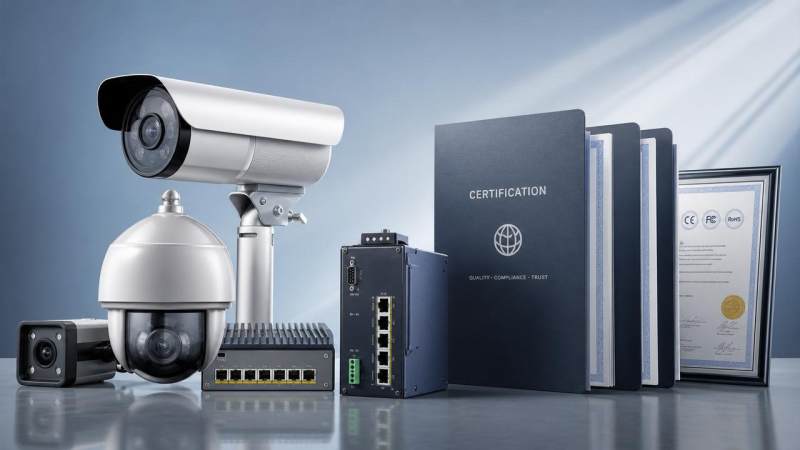
Choosing the right security compliance solutions manufacturer is no longer just a sourcing task—it is a strategic decision that affects risk control, project eligibility, and long-term operational trust. For procurement teams navigating global standards, evolving surveillance laws, and smart infrastructure demands, a clear comparison framework is essential. This guide explains how to evaluate manufacturers with greater confidence, from compliance strength and technical capability to supply reliability and future-readiness.
Why is comparing a security compliance solutions manufacturer now a procurement priority?
In the broader security market, compliance is no longer a supporting checkbox. It shapes whether a project can be approved, deployed, audited, and expanded across regions. For buyers in public safety, smart construction, transportation, campuses, utilities, and commercial buildings, the manufacturer behind the solution directly affects legal exposure and operational continuity.
A capable security compliance solutions manufacturer should not only provide devices or integrated systems. It should understand video surveillance rules, data handling expectations, product traceability, installation conditions, and documentation needs across multiple jurisdictions. Procurement teams often discover that weak compliance support creates hidden costs long after the purchase order is issued.
This is where GSIM brings value. As a global intelligence portal focused on physical security assurance and optical environment optimization, GSIM helps procurement teams compare suppliers through a more informed lens. Its Strategic Intelligence Center connects policy updates, optical technology trends, and commercial procurement signals, which is especially useful when security projects are tied to evolving smart city and digital infrastructure programs.
- Buyers face growing pressure to match surveillance equipment with local compliance rules, not just technical specifications.
- Cross-border sourcing can reduce cost, but it also increases certification review, document validation, and delivery risk.
- Solutions are becoming more integrated with AI vision, networking, lighting, and access control, making vendor evaluation more complex.
What should buyers compare first when evaluating manufacturers?
Many procurement teams compare price first, but that approach can be misleading. The better starting point is evaluation logic. Before discussing unit cost, compare manufacturers by compliance depth, engineering maturity, supply assurance, and support responsiveness. These four areas reveal whether a supplier can survive real project pressure.
The table below gives a practical framework for comparing a security compliance solutions manufacturer during prequalification and supplier shortlisting.
This comparison method helps separate low-price offers from dependable long-term options. A security compliance solutions manufacturer that performs well across all four dimensions usually reduces total procurement friction, even if its initial quote is not the lowest.
A simple shortlist rule for procurement teams
- Eliminate suppliers that cannot provide clear compliance documentation for your target market.
- Downgrade suppliers that have acceptable products but weak communication and unclear escalation processes.
- Prioritize manufacturers that can explain both technical performance and deployment restrictions in practical terms.
How to assess standards, certification, and compliance maturity
Not every compliance claim has the same value. Procurement teams should distinguish between basic manufacturing quality systems, product-level conformity, and project-level deployment compliance. A manufacturer may have a solid factory process but still be unprepared for the legal and documentation demands of a regulated surveillance project.
In practical sourcing work, the most useful question is not “Are you compliant?” but “Compliant for which market, which application, and supported by which documents?” A credible security compliance solutions manufacturer should answer that clearly and without hesitation.
What to request during document review
- Product conformity documents relevant to the destination market, such as electrical safety or electromagnetic compatibility records where applicable.
- Environmental and ingress protection data when solutions are intended for outdoor, industrial, or temporary site deployment.
- Installation manuals, user guides, firmware control procedures, and revision management records.
- Statements covering cybersecurity maintenance, software update logic, or data handling boundaries if networked devices are included.
GSIM’s intelligence-driven approach is valuable here because procurement decisions are often made under changing legal conditions. Through policy interpretation, trend tracking, and commercial insight, GSIM helps buyers understand not only whether a certification exists, but also whether it remains commercially relevant for future tenders and smart infrastructure projects.
The following table helps buyers separate different layers of compliance review when comparing a security compliance solutions manufacturer.
This layered review prevents a common mistake: assuming one certificate covers every procurement risk. In reality, the stronger manufacturer is usually the one with better document clarity, version control, and project-facing support.
Which technical and operational factors matter most in real projects?
A security compliance solutions manufacturer should be evaluated not only on what is sold, but on how the solution behaves under actual site conditions. Procurement teams in mixed-use industries often manage projects with changing light conditions, dust, vibration, weather exposure, bandwidth limits, and integration pressure from multiple contractors.
That is why GSIM’s focus on both physical security assurance and optical environment optimization is highly relevant. In many surveillance projects, poor optical planning leads to compliance and performance issues at the same time. If image quality collapses under glare, shadows, or weak lighting, recorded evidence may be less useful, and the system may fail practical acceptance expectations.
Core technical questions buyers should ask
- How does the manufacturer validate performance in low light, backlight, or mixed illumination environments?
- Can the solution integrate with existing VMS, access control, alarms, or building management platforms?
- What environmental range is supported for temperature, humidity, ingress, and mechanical exposure?
- Does the supplier provide firmware support, maintenance guidance, and lifecycle planning for long-term operation?
Application scenarios where comparison becomes critical
On smart construction sites, buyers often need rapid deployment, rugged equipment, and compliance-ready documentation for temporary yet high-risk environments. In public safety projects, legal review and evidence reliability carry more weight. In commercial or campus projects, interoperability and cost balance may dominate. The right security compliance solutions manufacturer should adapt its proposal logic to the scenario rather than present the same standard package every time.
Manufacturers that understand sector-specific conditions typically communicate differently. They ask for installation drawings, local regulations, lighting conditions, storage rules, and future expansion plans early in the process. That behavior often signals stronger project maturity.
How should procurement teams compare cost without ignoring risk?
Unit price is visible. Compliance failure is expensive. The procurement challenge is to compare both at the same time. A low quotation from a weak security compliance solutions manufacturer may look attractive until document gaps, delivery delays, or site performance problems trigger costly corrections.
A more reliable method is total procurement cost review. This includes pre-sales engineering effort, compliance document support, installation efficiency, spare parts planning, software maintenance, and the cost of supplier responsiveness when something goes wrong.
Cost elements buyers should include
- Initial product and integration cost, including accessories and commissioning requirements.
- Documentation and certification support cost, especially for regulated tenders or exports.
- Operational maintenance cost, such as firmware updates, replacement units, and remote support.
- Failure cost, including delays, reinstallation, compliance remediation, or owner dissatisfaction.
For buyers with limited budgets, alternatives may include phased deployment, standardized product families, or modular architectures that allow later upgrades. The key is not simply choosing the cheapest option, but selecting a manufacturer whose roadmap reduces future disruption. GSIM’s Commercial Insights perspective is useful in spotting these patterns because procurement trends often reveal whether a market is moving toward short-life low-cost hardware or more resilient compliance-oriented platforms.
What mistakes do buyers make when comparing manufacturers?
Mistake 1: Treating compliance as a document pack only
Compliance is also operational behavior. It includes version control, update discipline, deployment guidance, and response during audits or disputes. A document can be technically present but commercially weak if it does not match the shipped model or target country.
Mistake 2: Ignoring optical environment performance
Security systems often fail expectations because lighting and visibility conditions were not properly reviewed. A supplier that understands optical environment optimization can reduce blind spots, overexposure, and inconsistent capture quality. This matters in transport zones, entrances, parking areas, and construction perimeters.
Mistake 3: Overlooking after-sales structure
A responsive support model is not a luxury. It is part of procurement risk management. Buyers should know who handles technical escalation, how fast replacement decisions are made, and whether remote support is available for commissioning or fault diagnosis.
Mistake 4: Comparing vendors without a scoring matrix
Without weighted scoring, internal teams often default to subjective judgments. A scoring sheet covering compliance, technical fit, delivery, service, and commercial terms creates a more defensible decision path and helps align procurement with engineering and legal stakeholders.
FAQ: common buyer questions about a security compliance solutions manufacturer
How do I know whether a manufacturer is suitable for multi-country projects?
Ask for market-specific document support, model-level conformity records, multilingual manuals if needed, and evidence that the supplier understands regional deployment constraints. A suitable manufacturer should explain what changes between markets instead of assuming one package fits all.
What is more important: certification or technical performance?
In procurement reality, both matter. Certification supports legal and commercial eligibility, while technical performance determines whether the installed system works under real conditions. A strong security compliance solutions manufacturer should deliver both without forcing buyers to trade one for the other.
How should I compare delivery reliability between suppliers?
Review lead time commitments, component sourcing transparency, spare part planning, packaging standards, and communication during schedule changes. Delivery reliability is often visible in how detailed the supplier is before the order is signed.
Are newer AI-enabled solutions automatically better for compliance projects?
Not automatically. Advanced functions can improve detection and efficiency, but they may also introduce added review requirements around data handling, edge processing, and integration. Buyers should verify whether AI features fit the site’s legal, network, and operational framework.
Why choose us for decision support and supplier comparison?
GSIM helps procurement teams move beyond basic vendor screening. Our strength lies in connecting global security policy shifts, optical technology evolution, and real procurement signals into a practical decision framework. This is especially useful when comparing a security compliance solutions manufacturer for smart infrastructure, public safety, commercial development, or multi-site deployment.
When you work with GSIM, you can consult on concrete procurement issues rather than general marketing claims. We can help you clarify applicable compliance expectations, compare manufacturer documentation depth, review technical fit for specific site conditions, and identify questions that should be raised before quotation approval.
- Parameter confirmation for security and optical performance under your actual deployment conditions.
- Product selection guidance based on project type, risk level, integration demands, and budget boundaries.
- Delivery cycle discussion, including lead time concerns and supply continuity questions for phased procurement.
- Customized solution review for regional compliance requirements, documentation support, and scenario-specific adaptation.
- Sample support and quotation communication to improve internal comparison and shorten supplier evaluation cycles.
If your team is comparing manufacturers across compliance strength, technical suitability, and commercial stability, GSIM can support a more precise and defensible decision process. That is how procurement becomes less reactive and more strategic—visioning risks, illuminating the future.
- physical security assurance
- optical environment optimization
- global intelligence portal
- digital infrastructure
- strategic intelligence center
- optical technology
- AI vision
- procurement trends
- smart construction sites
- public safety projects
- commercial insights
- security compliance
- security systems
- global security
- security compliance solutions
- security compliance solutions manufacturer
The VitalSync Intelligence Brief
Receive daily deep-dives into MedTech innovations and regulatory shifts.